
Makka Madina – Spiritual Heart of Islam and Its Timeless Significance
Introduction to Makka and Madina
Why These Cities Matter in Islam
When you hear the words Makka Madina, you’re not just hearing the names of two cities – you’re stepping into the very soul of Islam. These cities are more than geographical locations; they are emotional anchors for over a billion Muslims worldwide. Located in Saudi Arabia, Makka (Mecca) and Madina (Medina) hold unmatched spiritual value that transcends time, borders, and cultures. Every prayer, every pilgrimage, and every spiritual aspiration in Islam connects back to these sacred lands.
Makka is considered the holiest city in Islam because it houses the Kaaba, the direction (Qibla) toward which Muslims pray five times daily. Mecca is also the birthplace of Prophet Muhammad, making it the origin point of Islamic revelation. Medina, on the other hand, is where the Prophet established the first Islamic community after migration. Together, these cities form the spiritual axis of Islam.
Global Importance for Muslims
Imagine a place that draws millions of people every single year – not for tourism, but for spiritual renewal. That’s exactly what Makka and Madina represent. According to recent reports, over 60 million worshippers visited the two holy mosques in 2025 alone, highlighting their global significance.
This isn’t just about numbers. It’s about unity. People from different languages, races, and cultures gather with a single purpose – worship. It’s like a river where every stream flows into one ocean of faith. Whether you’re from India, Indonesia, or the USA, your spiritual compass points to Makka Madina.
Historical Background of Makka
Early Origins of Makka
Makka’s history goes back thousands of years, long before the advent of Islam. It was already a significant trading hub due to its strategic location along ancient caravan routes. But what truly set it apart was the presence of the Kaaba, believed to have been built by Prophet Ibrahim (Abraham) and his son Ismail.
Over time, Makka evolved into a religious center where various tribes would gather. However, it wasn’t until the 7th century that its true significance was fully realized with the rise of Islam. The city is surrounded by mountains and valleys, which historically influenced its growth and development. (Encyclopedia Britannica)
Birthplace of Prophet Muhammad
Makka holds the honor of being the birthplace of Prophet Muhammad, making it the starting point of Islamic history. It was here that he received the first revelation in the Cave of Hira, marking the beginning of the Quranic message.
The early years of Islam in Makka were filled with challenges, including opposition and persecution. Yet, these struggles laid the foundation for a global religion. Today, every corner of Makka echoes that legacy, reminding visitors of resilience, faith, and divine guidance.
Read Also – Choosing the Best Hajj Packages for 2026
Historical Background of Madina
Madina Before Islam (Yathrib)
Before it became Madina, the city was known as Yathrib – a settlement inhabited by various tribes, including Jewish and Arab communities. It was a place of agriculture and trade, but it lacked unity and stability.
The transformation of Yathrib into Madina wasn’t just a change of name; it was a complete shift in identity. The arrival of Prophet Muhammad turned it into a center of peace, governance, and religious harmony.
Migration (Hijrah) and Its Importance
The Hijrah, or migration from Makka to Madina, is one of the most pivotal events in Islamic history. It marks the beginning of the Islamic calendar and symbolizes a transition from oppression to freedom.
In Madina, the Prophet established the first Islamic state, built a mosque, and created a constitution that ensured coexistence among different communities. This city became a model for Islamic governance and social justice.
Religious Significance of Makka
The Holy Kaaba and Masjid al-Haram
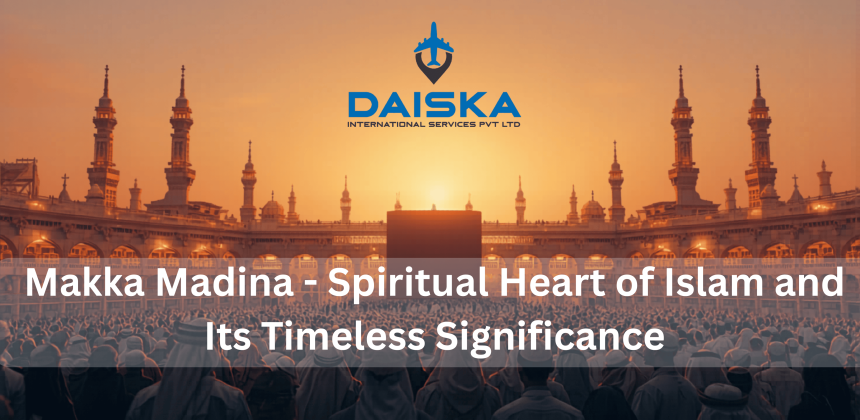
At the center of Makka lies the Kaaba, located within Masjid al-Haram. This cube-shaped structure is the focal point of Islamic worship. Millions of Muslims face it during their daily prayers, creating a powerful sense of unity.
Masjid al-Haram is one of the largest mosques in the world, capable of accommodating over a million worshippers at once. (Encyclopedia Britannica) The experience of standing in this المسجد, surrounded by believers, is often described as life-changing.
Hajj and Umrah Pilgrimage
Hajj is one of the five pillars of Islam, making Makka a mandatory destination for Muslims who are physically and financially able. Each year, millions gather to perform rituals that date back to Prophet Ibrahim.
Umrah, while not obligatory, is performed throughout the year and attracts millions as well. These pilgrimages are not just rituals- they are journeys of self-reflection, humility, and spiritual rebirth.
Religious Significance of Madina
Masjid an-Nabawi
Madina is home to Masjid an-Nabawi, the mosque built by Prophet Muhammad himself. It is the second holiest site in Islam and holds immense emotional value for Muslims.
The mosque is known for its stunning architecture and peaceful atmosphere. Unlike the intensity of Makka, Madina offers a calm, reflective environment where visitors often feel a deep sense of tranquility.
The Rawdah and Its Importance
Within Masjid an-Nabawi lies the Rawdah, often referred to as a “garden from Paradise.” It is one of the most sacred spots in Islam, where prayers are believed to hold special significance.
Visiting Rawdah is a deeply emotional experience. It’s not just about being physically present – it’s about connecting spiritually with the legacy of the Prophet.
Makka vs Madina: Key Differences
Spiritual Atmosphere Comparison
If Makka is intense and overwhelming, Madina is calm and soothing. Makka feels like a powerful storm of faith, while Madina feels like a gentle breeze.
Both experiences are equally important. One challenges you, the other comforts you. Together, they create a complete spiritual journey.
Role in Islamic Practices
Makka is central to rituals like Hajj and daily prayers, while Madina is more about reflection and connection with the Prophet’s life. Think of Makka as the heart and Madina as the soul.
Modern Developments in Makka and Madina
Infrastructure Expansion
Over the years, both cities have undergone massive development to accommodate the growing number of pilgrims. From high-rise hotels to advanced transportation systems, everything is designed to enhance the pilgrim experience.
Projects like the expansion of Masjid al-Haram and the Haramain High-Speed Railway have transformed accessibility and convenience.
Pilgrim Facilities and Technology
Modern technology plays a huge role in managing crowds, ensuring safety, and improving services. From mobile apps to AI-based crowd control systems, the experience is becoming smoother every year.
Economic and Cultural Impact
Pilgrimage Economy
The economies of Makka and Madina heavily rely on religious tourism. Hotels, transport, food, and retail sectors thrive due to millions of annual visitors.
This makes these cities not just spiritual hubs but also economic powerhouses.
Cultural Diversity
Walk through the streets of Makka or Madina, and you’ll hear dozens of languages. It’s like a mini United Nations, but with a shared spiritual purpose.
Visiting Makka Madina
Travel Tips for Pilgrims
- Plan your visit during off-peak seasons if possible
- Stay hydrated due to the hot climate
- Follow local guidelines and dress modestly
Best Time to Visit
While Hajj has fixed dates, Umrah can be performed year-round. Cooler months are generally more comfortable for travel.
Conclusion
Makka Madina are not just destinations – they are experiences that stay with you forever. They represent faith, unity, history, and spiritual awakening all in one. Whether you’re planning a visit or simply learning about them, these cities have a way of touching the heart in ways words can barely describe.
FAQs
1. Why are Makka and Madina important in Islam?
They are the two holiest cities, central to Islamic history, worship, and pilgrimage.
2. Can non-Muslims visit Makka and Madina?
No, entry is restricted to Muslims due to their religious significance.
3. What is the difference between Hajj and Umrah?
Hajj is mandatory once in a lifetime, while Umrah is optional and can be performed anytime.
4. How many people visit Makka and Madina yearly?
Over 60 million visitors were recorded in 2025 alone.
5. What is the Rawdah in Madina?
It is a sacred area in Masjid an-Nabawi believed to be a garden from Paradise.